Shared Dishes · University capstone · 2021

Shared Dishes

Exploring identity and belonging through stories shared at the table.

Explore Shared Dishes

Rotate the view of each scene, read the transcripts, or listen to the interviews.

Project details

Role

Research, 3D & Interaction Design

Project

Fourth-year university capstone

Tools

Cinema 4D · After Effects · Webflow

Skills

  • Design Research
  • Concept Development
  • 3D Design
  • Interaction Design
  • Visual Storytelling

Across three interviews, Shared Dishes explores conflicting identities, a parent’s hopes for belonging, and the desire to carry culture forward. I translated these conversations into interactive 3D scenes with interview audio and transcripts.

Professor Angela Norwood


Why I made it

A personal question, a shared table.

I began with questions about being Asian and Canadian. Research and interviews helped me explore the tension between wanting to preserve inherited culture and wanting to belong where we live.

Research question

How can immersive digital experiences help viewers understand acculturation in second-generation Asian Canadians?

I included my father’s perspective to understand how his hopes for life in Canada differed from my own desire to stay connected to our roots. This is a personal exploration through three conversations, not a study of all Asian Canadians.

My starting point was a shared dining table and a lazy Susan: a place where food, conversation, and culture meet. The final project developed into individual interactive scenes drawn from the interviews.

Each scene interprets an interview through what the person told me and my own memories. They aren’t literal reconstructions of anyone’s life.

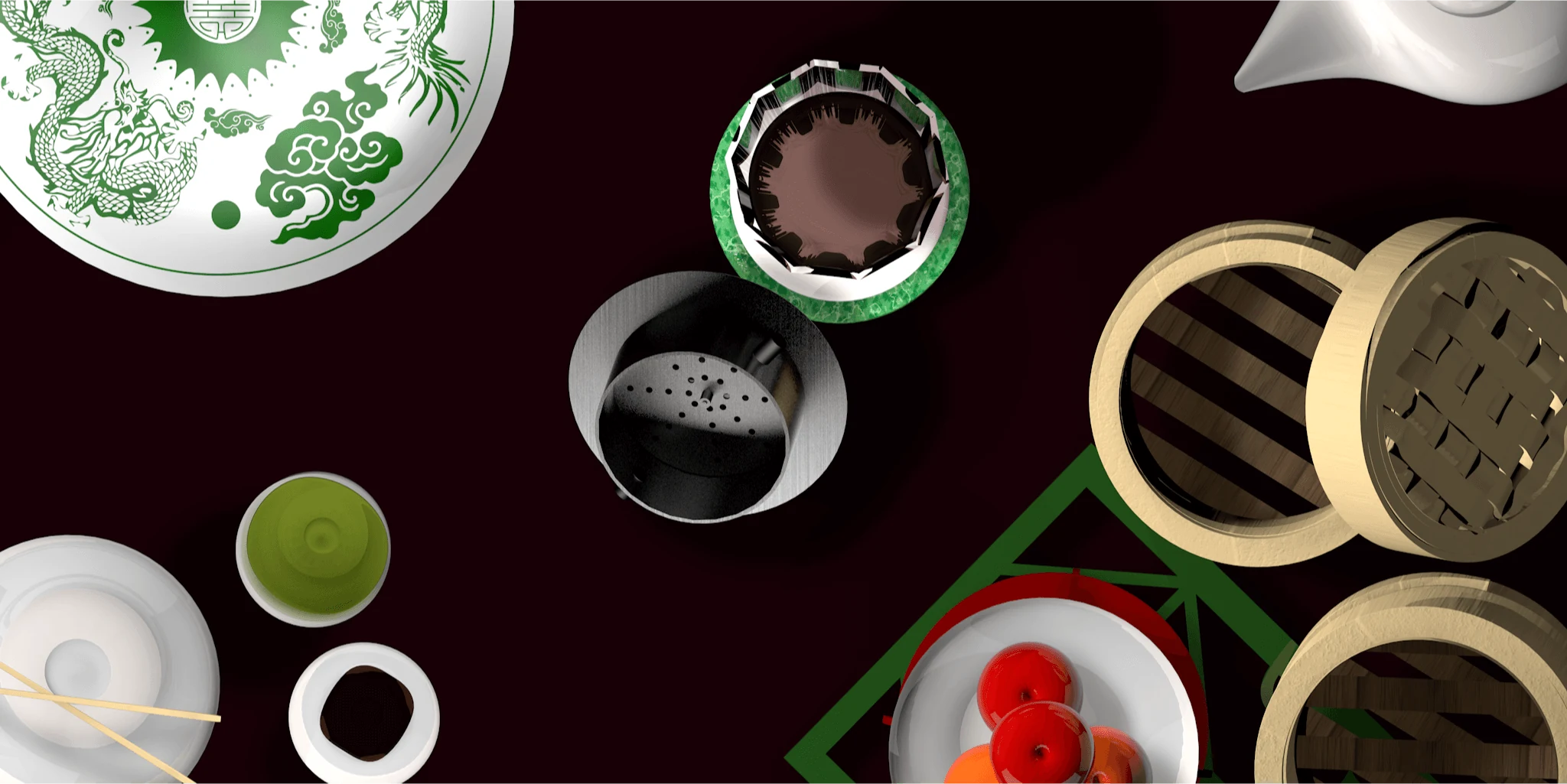
Looking down on a dark table set with dishes from the project: a dragon-patterned plate, a coffee drip filter, bamboo steamers, a teapot, small cups and a plate of fruit.
A detail from one of the interview designs

Design process

From conversations to scenes.

The project brings together three interviews. Each scene started with something I heard in an interview. I then chose the objects, arrangement, and sounds to carry it. Below, I break down the design decisions behind two of the scenes.

Dear Ba

An intimate conversation, already in progress.

Move across the scene to explore.

What I heard

The interview opens with coffee. My dad describes ingredients in Canada as higher quality, and ingredients in Vietnam as better tasting. I read that as a difference between quality of life and the familiarity of home. That reading is mine, not something he said.

He chose a Western name for me because he wanted me to belong in Canada. I’m fond of the name he gave me, but I’ve wondered why I don’t have an Asian name, and at times I’ve felt disconnected from my culture.

How I translated it

I wanted visitors to feel they had joined an intimate conversation, around a familiar activity that might look different from their own mornings.

I started the edit as if the conversation was already underway, and kept the pauses, fumbling, and switches between languages.

I kept the scene mostly still so it felt like a snapshot of our morning. The sounds come from that routine: the kettle, a spoon stirring, and my dogs’ footsteps on the tile.

Takeaway

This is the only interview where you hear my voice. I was trying to speak my dad’s language with limited fluency, and I wanted that effort to be audible.
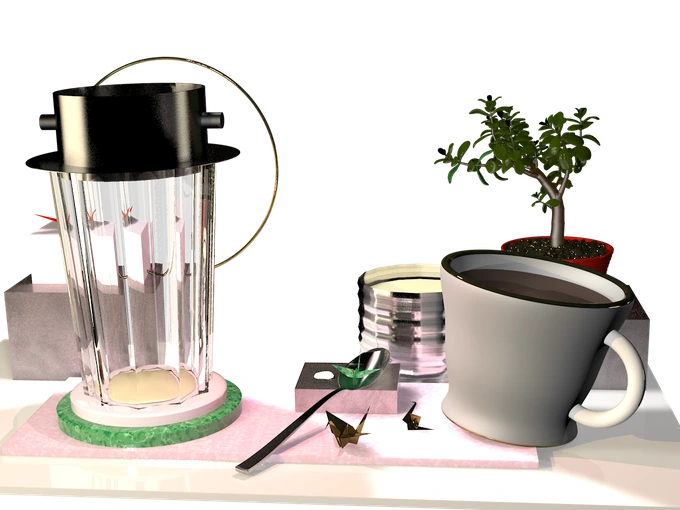
My cup, a tall glass under a Vietnamese drip filter, beside my dad's mug of instant coffee and a tin of condensed milk.
His instant coffee is already made; mine is still waiting on the drip filter. I raised my cup to make the waiting moment the focus.
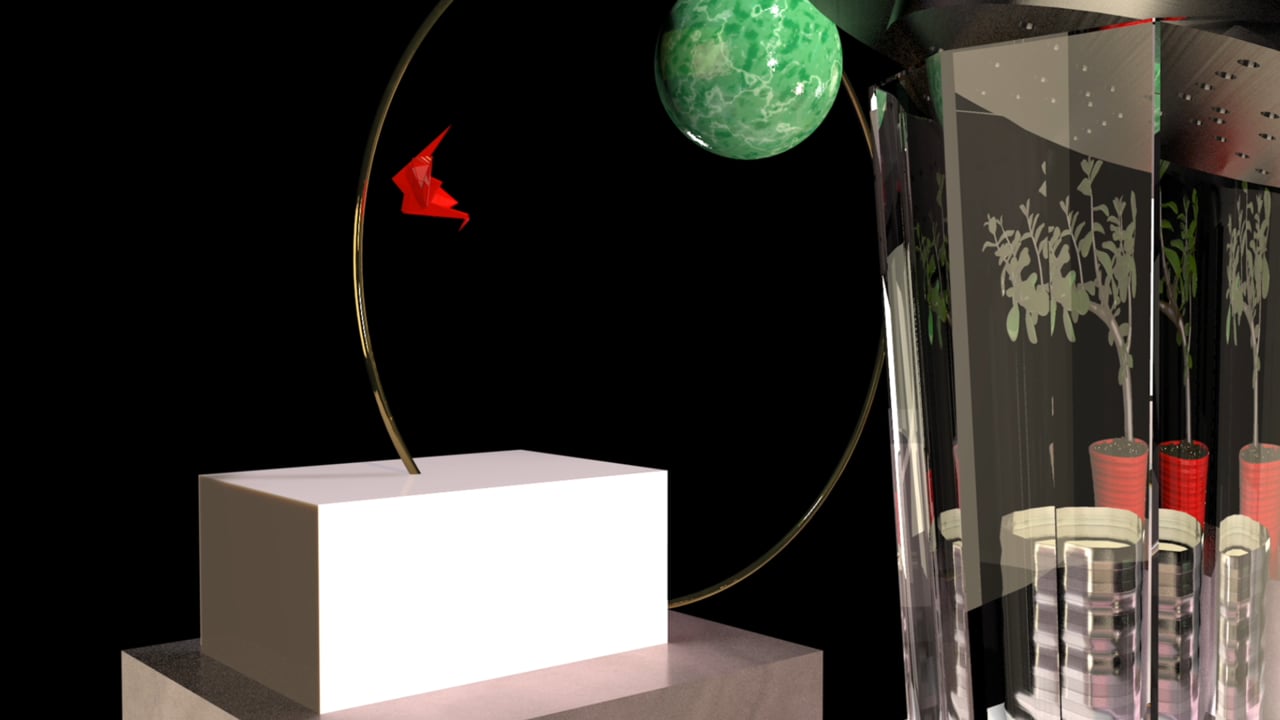
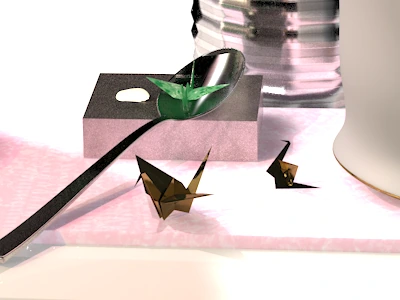
Two gold paper cranes on the tablecloth, and a green paper crane resting in a spoon.
My dad taught me to fold cranes. I included them as a memory of time spent together, and of folding to pass the time.
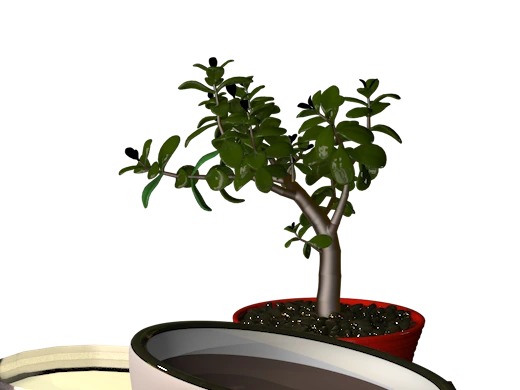
A small jade tree in a red pot, behind the rim of my dad's coffee mug.
Plants are another interest my dad and I share.

Moms and daughters

Belonging through participation.

Move across the scene to explore.

She mentioned symmetry at the temple, so I balanced the scene with the same kinds of objects on both sides, without mirroring them exactly.

What I heard

She talked about her mother’s cooking and choosing to visit the temple with her grandmother, where she felt she belonged. We also talked about a responsibility to carry culture forward, while recognising that growing up in Canada shaped our experience differently.

How I translated it

I interpreted those themes through an offering table, drawing on my own experience of food, prayer, and gathering to share the food afterward. This is my interpretation, not a scene she described. Fruit, incense, and orchids come from that interpretation. Plates and muffled conversation suggest people gathering around the table.

My interpretation

Her account of her mother’s cooking made me think about how food carries culture from grandmother to mother to daughter, and how she might pass it on herself.

Banana Crisis

An interview about the tension between identities and what it feels like when different parts of who you are seem to contradict each other.

Explore the interview: Banana Crisis

Building the experience

Learning through making.

I chose 3D because I wanted to learn it, and I had little experience with it. Time shaped the final format: interactive 3D scenes whose view visitors rotate with the mouse, with transcripts and edited interview audio alongside.


Reflection

What I took with me.

My parents anchor me to my roots. It’s their small routines and ways of doing things that I hold onto. Making Shared Dishes helped me see my own assumptions more clearly.